Is your front load washing machine performing a frantic dance across your laundry room during the spin cycle? That jarring vibration isn’t just annoying; it can lead to serious problems like excessive noise, appliance damage, and even wear on your flooring. A perfectly level front load washer is crucial for smooth operation, efficiency, and prolonging its lifespan. Fortunately, most vibration issues stem from an unlevel machine—a problem you can often fix yourself with a few simple tools and a bit of know-how. This comprehensive DIY guide will walk you through the precise steps to level your front load washer, diagnose common culprits behind persistent shaking, and ensure your laundry days are quiet and hassle-free.
Why a Level Front Load Washer Matters for Your Home
A stable front load washing machine is more than just a convenience; it’s fundamental to its performance and longevity. When your washer is off-kilter, the drum can become unbalanced, especially during high-speed spin cycles. This imbalance creates significant vibrations that manifest as loud thumping, rattling, and even the “walking” of the appliance across the floor. Beyond the immediate annoyance, an unlevel front load washer can cause premature wear on internal components like bearings and shock absorbers, reduce washing efficiency, and potentially damage your flooring or surrounding cabinetry. Proper leveling ensures the drum spins smoothly, distributing the load evenly and maximizing the life of your appliance.
Essential Tools for Leveling Your Front Load Washer
Before you begin, gather these common household tools. Having them on hand will make the leveling process much smoother and quicker:
- Spirit Level (Bubble Level): Essential for accurately checking horizontal and vertical alignment. A smartphone app can also serve this purpose.
- Adjustable Wrench or Pliers: To loosen and tighten the lock nuts on the leveling feet. Some models might require a specific wrench size (e.g., 9/16” or 14mm).
- Flashlight: Useful for seeing under the machine, especially to locate lock nuts and leveling feet in dimly lit laundry areas.
- Wood Block or Shim (Optional): Can be used to gently prop up the washer for easier access to the rear legs, or to shim an uneven floor if the feet alone can’t compensate.
- A Helper (Recommended): Moving a heavy appliance safely is much easier with an extra set of hands.
Step-by-Step Guide: How to Level Your Front Load Washer
Follow these instructions carefully to ensure your front load washer is perfectly balanced and stable.
1. Safety First: Unplug and Disconnect
Your safety is paramount. Before touching any part of the machine, always:
- Unplug the washer from the electrical outlet.
- Turn off the water supply to the washer by closing the hot and cold water valves. This prevents accidental leaks or electrical hazards.
2. Prepare the Washer
Make sure the washing machine is completely empty. Remove any laundry or items from the drum. If there’s any water inside, run a drain cycle first.
3. Position and Access
Gently pull the front load washer away from the wall, leaving enough space to work around it, especially at the back. Be careful not to strain or kink the water hoses or power cord. If your machine is on a pedestal, the leveling process is similar but you’ll adjust the pedestal’s feet.
4. Check for Level
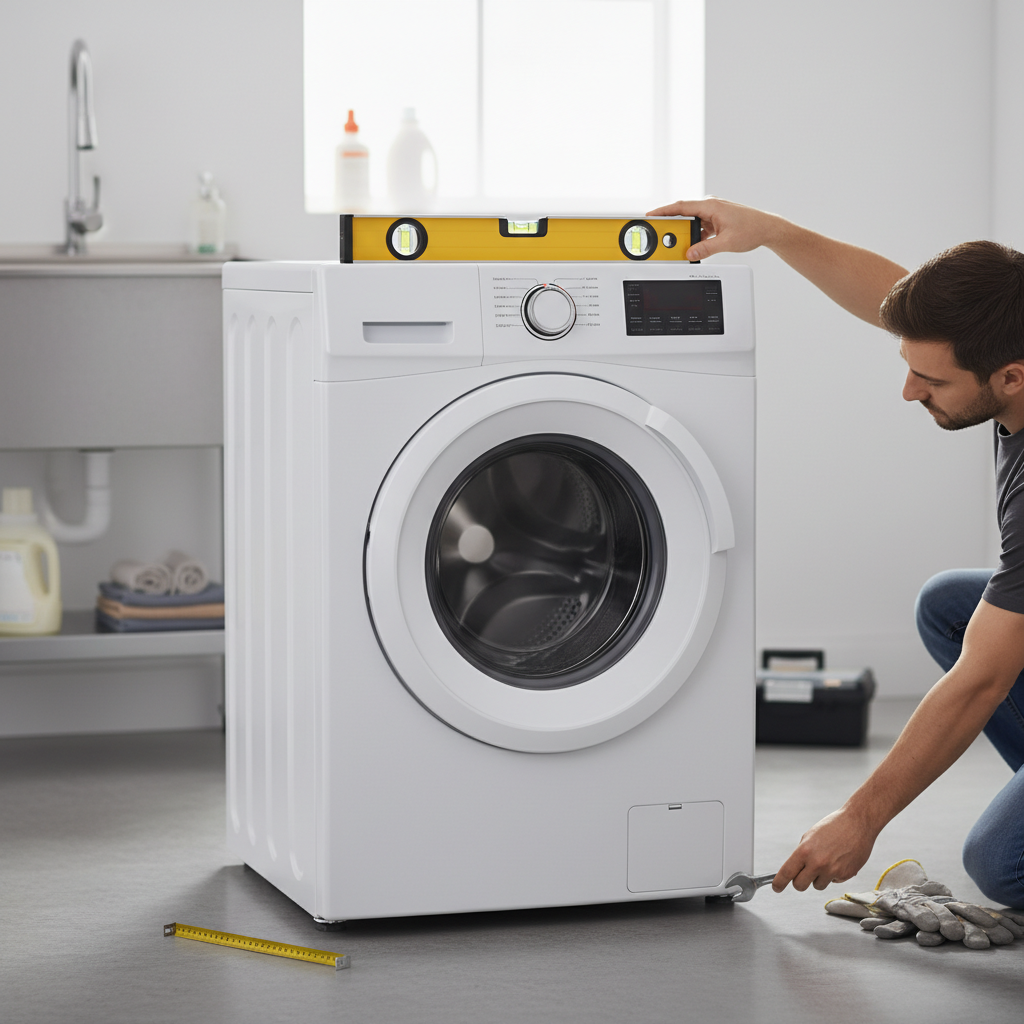
Place your spirit level on the top surface of the front load washer. Check for level in multiple directions:
- Front-to-back: Place the level along the front edge of the top panel.
- Side-to-side: Place the level along one of the side edges of the top panel.
- Diagonally: Place the level from one front corner to the opposite rear corner.
Observe the bubble. If it’s not perfectly centered, your washer is not level. Note which corners or sides are higher or lower.
5. Identify and Adjust Leveling Feet
Most front load washers have two adjustable leveling feet at the front and sometimes two at the back. Some models may have self-leveling rear legs that adjust automatically when the machine is tilted forward and set back down.
- Loosen the Lock Nuts: For each adjustable foot, locate the lock nut (also called a jam nut) just above the foot. Use your adjustable wrench or pliers to loosen this nut by turning it counter-clockwise. Loosen it sufficiently so the foot can turn freely.
- Adjust the Feet: Turn the leveling foot clockwise to lower that corner of the washer, or counter-clockwise to raise it. The goal is to make all four feet firmly contact the floor while achieving a level surface. A general rule is to keep the washer as low to the ground as possible for maximum stability.
- Re-check Frequently: As you adjust one foot, periodically re-check the level across the top of the machine. It’s an iterative process. You may need to adjust multiple feet to achieve perfect balance.
- Tighten the Lock Nuts: Once the washer is perfectly level in all directions, securely tighten the lock nuts against the washer’s frame. This is a critical step; if left loose, the feet can shift during operation, leading to future vibration.
6. Final Stability Test
With the lock nuts tightened, try gently rocking the front load washer diagonally from corner to corner. There should be no noticeable wobble or movement. If it still rocks, re-check your level and adjust the feet again.
7. Reconnect and Test
- Reconnect the power cord and turn on the water supply.
- Run a small, empty test load or a rinse and spin cycle. Observe the washer during the spin cycle. It should operate smoothly and quietly with minimal vibration. If excessive shaking persists, proceed to the troubleshooting section.
Troubleshooting Common Front Load Washer Leveling Issues
Even after careful leveling, your front load washer might still shake. Here are other common issues and how to address them:
-
Uneven Flooring: Your floor itself might be the problem. If the floor is significantly sloped, warped, or made of a flexible material like thin plywood or soft tile, the washer may struggle to remain stable.
- Solution: Consider placing a sturdy anti-vibration mat or rubber shims under the washer’s feet. For extremely uneven or weak floors, you might need professional floor reinforcement.
-
Unbalanced Laundry Loads: This is a very frequent cause of vibration, even with a perfectly level machine.
- Solution: Always distribute clothes evenly inside the drum. Avoid washing single, bulky, or very absorbent items (like a heavy blanket or a single pair of jeans) alone, as they can clump and throw the machine off balance. The “one-hand rule” can help: if you’ve loaded your clothes and can still fit one hand in the drum, it’s generally well-loaded.
-
Shipping Bolts Still in Place: For new front load washer installations, crucial shipping bolts are often installed at the back to protect the drum during transport. If these aren’t removed, they can cause severe vibration and damage.
- Solution: Consult your washer’s manual to locate and remove any shipping bolts. This usually involves unscrewing a few large bolts from the rear panel.
-
Worn or Damaged Components: Over time, internal parts can wear out.
- Shock Absorbers/Suspension Springs: Front load washers rely on shock absorbers and suspension springs to cushion the drum’s movement. If these are worn or broken, the drum will become unstable, leading to excessive shaking.
- Leveling Feet: If the leveling feet themselves are stripped or damaged, they may not adjust properly or maintain their position.
- Solution: For these issues, it’s best to call a professional appliance technician. Attempting internal repairs without expertise can void warranties or cause further damage.
Maintaining Your Front Load Washer for Optimal Performance
Regular checks and good habits can prevent future vibration problems:
- Periodic Level Checks: Recheck your front load washer’s level every few months, or if you notice any new vibrations. Homes settle, and floors can shift.
- Proper Loading: Always aim for balanced loads. Avoid overloading the machine, as this strains components and makes balancing difficult.
- Avoid Dragging: When moving your washer, avoid dragging it, as this can damage the leveling feet or cause them to twist out of adjustment. Lift it or use appliance glides if you need to reposition it.
- Keep Area Dry: Maintain a dry environment around your washer to prevent floor warping that could lead to unleveling.
When to Call a Professional
While many shaking issues with your front load washer can be resolved with DIY leveling and load management, some problems require expert intervention. If you’ve diligently followed all the steps in this guide, checked for unbalanced loads and shipping bolts, and your washer still experiences excessive vibration or noise, it’s a strong indicator of an internal mechanical issue. Worn shock absorbers, damaged suspension rods, or other internal component failures are complex repairs best left to a qualified appliance technician. A professional can accurately diagnose the root cause and ensure your machine is repaired safely and effectively, restoring its smooth, quiet operation.
A vibrating front load washer can disrupt your home and lead to costly repairs if left unaddressed. By understanding the importance of proper leveling and following this DIY guide, you can significantly reduce noise, prevent damage, and extend the lifespan of your appliance. Remember to prioritize safety by unplugging the unit and shutting off the water before making any adjustments. With a level, wrench, and a bit of patience, you can ensure your front load washer runs smoothly and quietly for years to come. What’s the quietest your laundry room has ever been?
Frequently Asked Questions
How often should I level my front load washer?
|
Our Picks for the Best Front load washing machine in 2026
As an Amazon Associate I earn from qualifying purchases.
|
||
| Num | Product | Action |
|---|---|---|
| 1 | BLACK+DECKER 4.5 Cu. Ft. Front Load Washer, Full Size Washing Machine with 12 Cycles, ENERGY STAR certified Washer Machine, Hot & Cold Inlet Hoses, LED Display, 120V, BFLW45M, White |

|
| 2 | GE GFW655SPVDS 5.0 cu.ft. Smart Front Load Washer with Steam, UltraFresh Vent System, Black |
|
| 3 | Kenmore 4.5 cu. ft. Front Load Washer with Stain Removing Steam Treatment - Reduce Laundry Time with Accela Wash - LED - ENERGY STAR Certified - Metallic Silver |
|
| 4 | Maytag 4.5 cu ft. Front Load Washer with 12-hour Fresh Spin Option |
|
| 5 | LG WM3400CW 4.5 cu ft Front-Load Washer – High-Efficiency, LoDecibel™ Quiet Operation, 6Motion™ Technology, White |
|
| 6 | West Bend Washer Compact Front Load Washing Machine with 15 Wash Cycles, LED Display, See-Through Door, Stackable and Space-Saving Design, for Apartments, RVs, and Small Spaces, 2.2 Cu.Ft., White |
|
| 7 | Kenmore 4.5 cu. ft. Top Load Washer with Triple Action Impeller for Tough Dirt & Stains - Reduce Laundry Time with Accela Wash & Express Wash - LED - White |
|
| 8 | GE PROFILE 28 Inch Smart Front Load Washer with 4.8 cu. ft. Capacity in White GFW550SSNWW |
|
| 9 | GE 5.0 cu.ft. Smart Front Load Washer in White with Steam, UltraFresh Vent System, and Microban Technology |
|
| 10 | Samsung 4.5 cu. ft. High Efficiency Front Load Washer with Vibration Reduction Technology+, White, WF45T6000AW/A5 |
|
It’s a good practice to check your front load washer’s level every few months, or immediately if you notice increased vibration or noise during operation. Factors like floor settling or moving the appliance can cause it to become unlevel over time.
Can an unlevel front load washer damage my floor?
Yes, persistent vibration from an unlevel front load washer can cause damage to your flooring, including scratches, dents, or even structural wear over time, especially on softer floor types like wood or vinyl.
Do all front load washers have adjustable feet?
Most front load washers are equipped with adjustable leveling feet, typically two at the front and sometimes two manual or self-leveling ones at the back. Always refer to your specific washer’s user manual for details on its leveling mechanism.
What are “shipping bolts” and why are they important?
Shipping bolts are protective fasteners installed in new front load washers to secure the drum during transit. If these bolts are not removed before operation, they can cause severe vibration, noise, and significant damage to the machine.
What should I do if my front load washer has self-leveling rear legs?
If your front load washer has self-leveling rear legs, you typically only need to adjust the front two feet. The rear legs will automatically adjust when you tilt the machine forward a few inches and then gently set it back down, ensuring all four feet are in contact with the floor.
Is it normal for a front load washer to shake a little during the spin cycle?
A small amount of vibration during the high-speed spin cycle can be normal for a front load washer. However, excessive shaking, thumping, or the machine “walking” across the floor indicates an issue that needs to be addressed, likely due to unleveling or an unbalanced load.